Spain publishes framework for grants supporting quantum technology projects
The order published on Saturday provides for grants managed by Red.es. Future calls must establish funding, deadlines and application conditions.
By Wellinton OliveiraCEO of Lyntev
Published
3 min read
Key points
- The framework covers experimental applications, laboratories, cleanrooms and testbeds.
- Companies and research organisations may be eligible, with restrictions by category.
- Applications must be individual and projects must take place in Spain.
- Each call will set the amounts, aid rates and application timetable.
Spain published the framework rules for future support for quantum technology projects on Saturday, 28 November. Order TDF/1278/2026, signed on 19 November, covers experimental applications, laboratories, cleanrooms and testbeds. Public agency Red.es will manage the grants.
Publication in the Boletín Oficial del Estado establishes the framework for calls that may subsequently be launched. It does not itself open an application period or set an overall budget available for allocation. The order enters into force the day after publication, on 29 November.
Three routes for funding projects
Article 2 distinguishes three types of activity. The first is the experimental development of use cases. It includes combining artificial intelligence and quantum technologies, more accurate or efficient AI models, quantum and quantum-inspired algorithms, ultraprecise sensing and metrology, post-quantum encryption and cybersecurity.
The second route is building or improving laboratories specialising in quantum sensing, metrology and communications. It also covers cleanrooms for researching, developing and manufacturing quantum components: facilities where contamination is controlled during sensitive processes.
The third is building or improving testbeds for solutions based on quantum technologies. The order allows both research infrastructure and testing and experimentation infrastructure within this category, distinguishing the applicable legal classifications.
The list of eligible activities does not mean that every type will receive support simultaneously in the same call. Article 6 leaves the start of each award procedure to a public call, which must develop the conditions established by these framework rules.
Who can apply and where projects must take place
Article 8 includes companies, universities and university institutes, state-level technology centres, public research bodies and other public centres whose main activity is research, development and innovation. Each category is subject to the requirements in the order and the conditions specified in the relevant call.
A specific restriction applies to the laboratories and cleanrooms in the second type of activity. Only public universities and their institutes, public research bodies and other public research and development centres can benefit from that category.
Proposals must be submitted individually. The framework excludes applications from consortia, temporary joint ventures or other groupings. Under Article 5, projects must be carried out in Spain and data covered by the projects must be hosted on infrastructure located in the European Union.
The organisation must have a tax domicile, tax residence or permanent establishment in Spain when the aid takes effect. That requirement appears in Article 8(4)(a).
For companies and state-level technology centres, Article 7 requires the grant to provide an incentive. An application must precede the start of work; large companies must also demonstrate how support changes the project's scope, investment or speed of implementation.
Amounts and timing depend on each call
Article 15 provides for funding from Red.es's own resources and the possibility of certifying activities under Spain's European Regional Development Fund programme for 2021–2027. The order does not award every applicant a single uniform funding percentage.
Maximum aid rates will be established in each call, within limits that vary according to the project, beneficiary and economic nature of the activity. Calls will also set the minimum and maximum grant amounts for each type of project and the territorial allocation of resources.
The timetable follows the same approach. Article 21 states that application and implementation periods will be defined in the calls. The three-month maximum for submitting applications runs from publication of each call's extract in the BOE; it is not a window opened by publication of these framework rules.
Article 4 states that a project's implementation cannot exceed 36 months from publication of the award decision. That ceiling does not replace the specific implementation period subsequently approved for each call.
The call is the next decisive document
The distinction between a framework and an opening has a practical consequence. The document identifying available funding, the deadline and specific application conditions is still required. Article 23 of Spain's General Subsidies Act, to which the order refers, requires those elements to appear in the call.
Under Article 6 of the new framework, each call will be published in the National Subsidies Database, with an extract in the BOE, and on Red.es's electronic portal. Articles 19 and 22 provide for electronic submission of applications and the required technical documentation. That future publication will establish when, and under which conditions, an organisation can submit its project.
Sources
Documents, reporting and references gathered for this story. Access limits are stated in the text or the reference itself.
A primary source is the origin of a document or statement; it may be the interested party itself. This label does not mean independent confirmation. The list also includes context and image references where relevant.
- Orden TDF/1278/2026, de 19 de noviembre — BOE-A-2026-25080Boletín Oficial del Estado, . Primary source. accessed 28 November 2026
- Ley 38/2003, General de Subvenciones, artículo 23Boletín Oficial del Estado. Primary source. accessed 28 November 2026
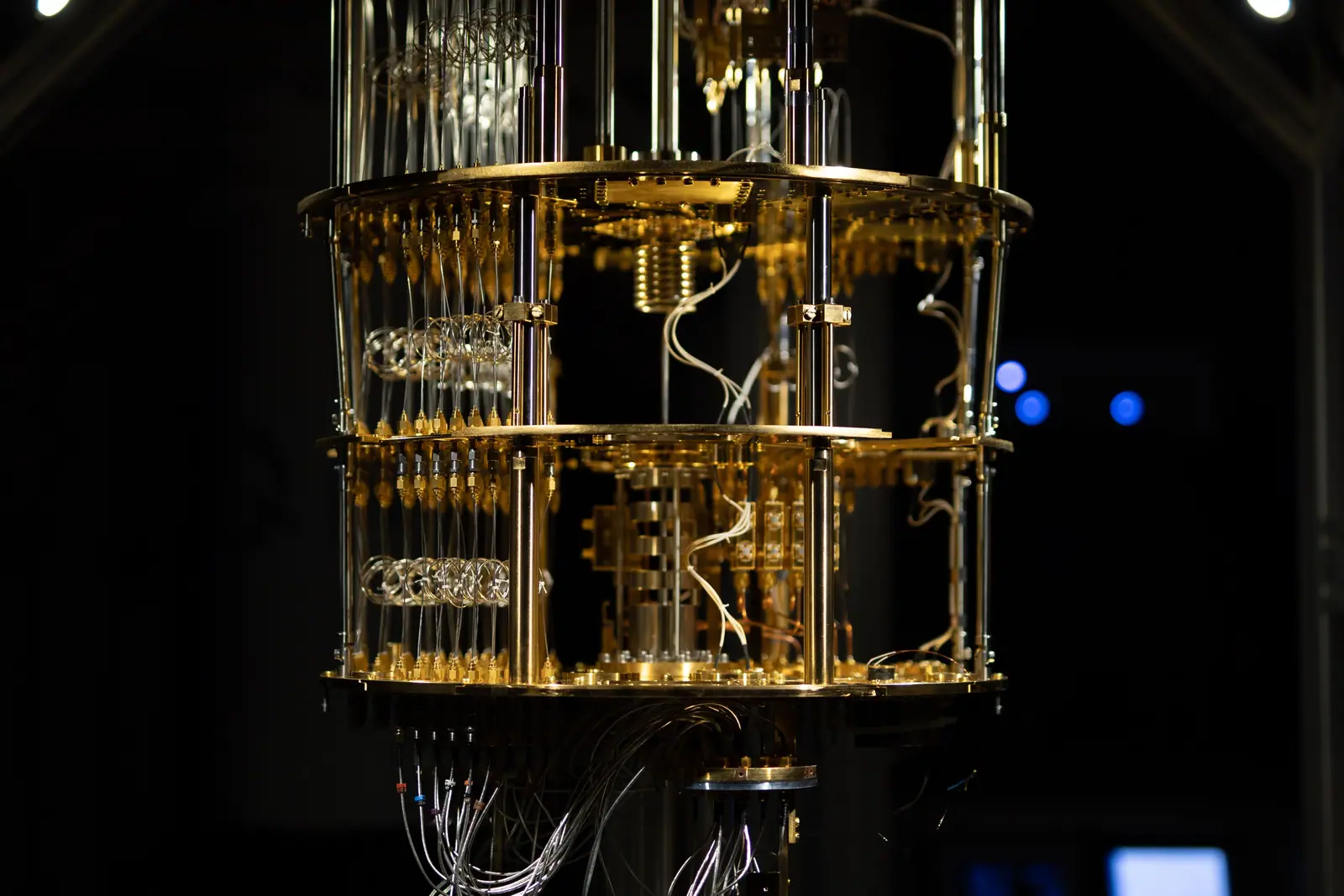
- IQM Quantum Computer Espoo Finland — autoria e licença da fotografiaWikimedia Commons / Ragsxl, . Primary source. accessed 28 November 2026
Topics

Written by
Wellinton OliveiraCEO of Lyntev
Technology with context, original analysis and sources you can consult.