Iran used Starlink in attacks on US forces and SpaceX curbed resales, Washington Post says
According to an exclusive by The Washington Post, Iran used Starlink terminals to support attacks on US forces early in the war, and SpaceX later tightened how the dishes are sold. There is no independent confirmation and the company did not respond.
By Wellinton OliveiraCEO of Lyntev
Published
6 min read
Key points
- The Washington Post report, published on 28 November, rests on four people who spoke on condition of anonymity.
- A classified update for the US defence secretary reportedly described Iran using Starlink for command and control and attack drones.
- The Pentagon says it is not aware of that report; SpaceX and Elon Musk did not respond to the newspaper.
- According to the Post, SpaceX required resellers to identify every customer and paused its indirect reselling programme.
- There is no independent confirmation of the Iranian use or of any role for Starlink in the strike that killed six US troops in Kuwait.
Iran used SpaceX's Starlink satellite internet service to support military operations against US forces in the first weeks of the war, according to an exclusive by The Washington Post published on 28 November, which The Spokesman-Review republished in full. The newspaper says four people familiar with the operations confirmed that use, all speaking on condition of anonymity.
According to the same report, SpaceX responded in the following weeks with new sales rules: it required resellers to know the identity of every customer and paused the programme that allowed terminals to be sold through sub-resellers. There is no independent confirmation of these facts. SpaceX and Elon Musk did not respond to the newspaper's repeated requests for comment.
What The Washington Post reports
The story, by Ellen Nakashima, Elizabeth Dwoskin, Tara Copp and Alex Horton, describes Elon Musk as fuming in the first week of March. The United States and Israel had begun bombing Iran on 28 February, and Tehran was answering with missiles and drones aimed at American bases across the Middle East.
Two people familiar with the company's internal discussions told the paper that Musk's team concluded Iran was using Starlink in its military campaign. One of them added that at least two executives had been fired over the misuse by the end of that week.
Another person described to the Post a classified update on the war, given to Defence Secretary Pete Hegseth in the summer and produced by Central Command, which runs US operations in the region. It briefly referred to Iran using the technology for command and control of its forces and to oversee one-way attack drones, the kind that crash into their target. According to that source, Starlink served as a fallback once US strikes had degraded Iran's traditional communications.
The TechCrunch summary repeats these points but relies on the Post itself. It is not a second confirmation.
What the Pentagon, SpaceX and the White House said
Pentagon spokeswoman Kingsley Wilson told the paper the department was not aware of the existence of a Central Command report on the subject sent to the secretary's office. She declined to say whether Iran had used Starlink more generally, including in the 1 March strike at Port Shuaiba, Kuwait, which killed six US military personnel.
Central Command declined to answer detailed questions. The Pentagon has not released the findings of its investigation into that strike. The White House did not respond about Starlink's current status in Iran. Reuters, which reported on the Post's story, also received no immediate response from SpaceX or the Defense Department, according to the agency's copy published by CNBC. At the time of writing, no public reaction from SpaceX or Musk had been found.
How a Starlink terminal is bought and activated
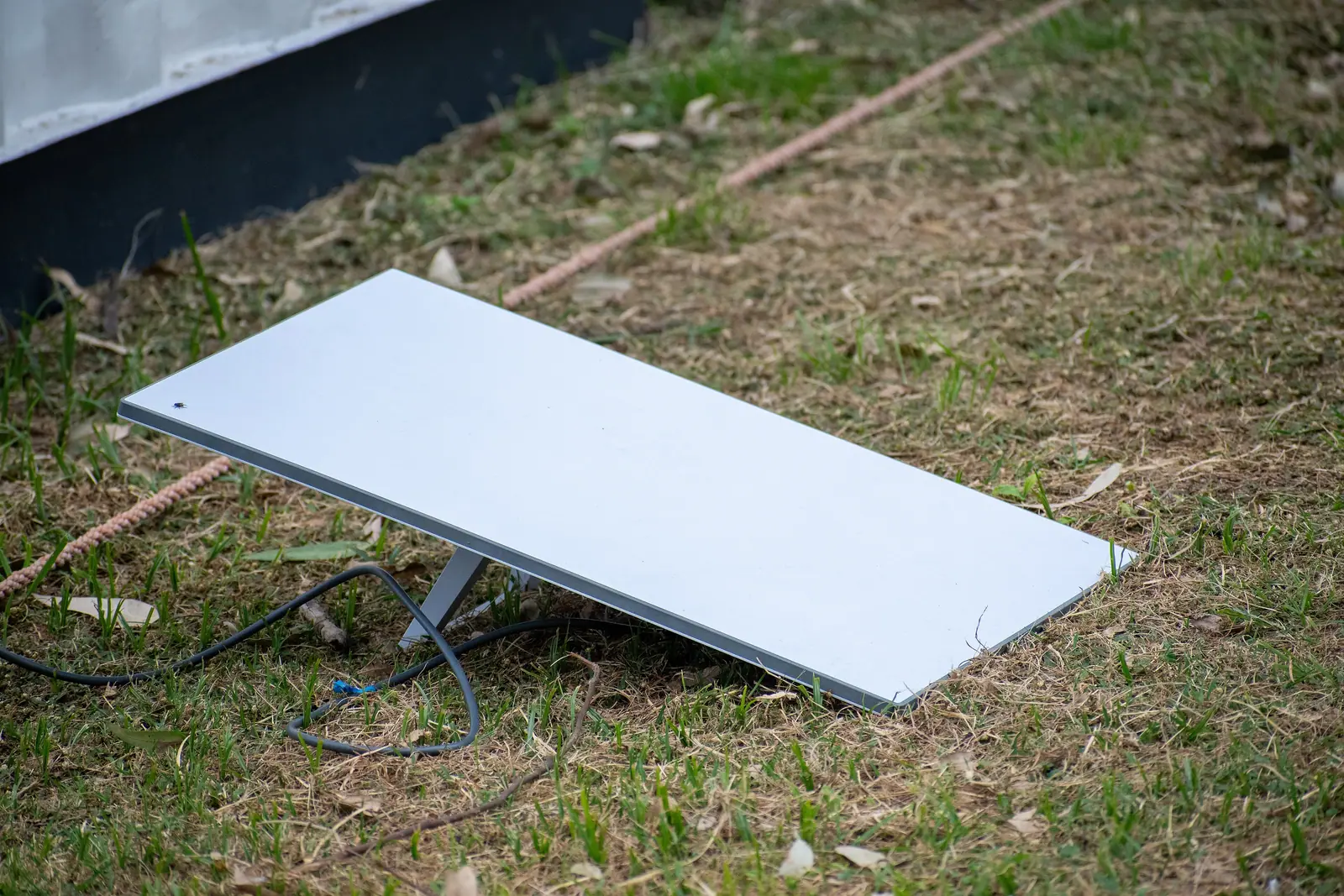
Starlink connects users to the internet through thousands of satellites in low orbit. Users need a terminal, a flat dish that talks to the satellites, and an active subscription. According to Reuters, the constellation has roughly 10,000 satellites, more than 60% of all satellites in orbit.
The Post says the service is available in more than 160 countries through hundreds of authorised resellers, third-party companies vetted before they join the programme. Until the new rules, two industry executives told the paper, a credit card was usually enough to sign up. According to one of them, a terminal activated in one country could be used in another, a common practice among Iranian dissidents.
That is where the indirect reselling programme described by the Post came in: authorised resellers could pass terminals to sub-resellers, who sold and activated them. According to the Post, a Starlink support page published in April justified the pause, saying the model created compliance risk and reduced visibility into end customers.
From the war to the sales rules: a timeline
| Date | What happened | Who says so |
|---|---|---|
| January | SpaceX cuts off terminals moving faster than 70 km/h in Ukraine | The Washington Post |
| 28 February | The US and Israel begin striking Iran | Al Jazeera |
| 1 March | An Iranian drone kills six US troops at Port Shuaiba, Kuwait | The Washington Post |
| 1 and 2 March | Identity checks for aircraft flying faster than about 160 km/h | The Washington Post, citing pilots and emails |
| April | Starlink notice on indirect reselling | The Washington Post |
| May | Pricing dispute over terminals on US LUCAS drones | Reuters |
| Summer | Classified update for Pete Hegseth | The Washington Post, one source |
| 14 October | Iranian official calls Starlink a “tool of war” | Al Jazeera |
| 28 November | The exclusive is published | The Washington Post |
The aircraft rule arrived within hours of the Kuwait strike, according to pilots quoted by the Post. One private pilot told the paper he could use his terminal again only after handing over his passport and driving licence numbers and his plane's tail number. The monthly fee, he said, went from $60 to $200.
Ukraine, Starshield and the speed limit
The Iranian case repeats a problem already seen in Ukraine. In January, according to a former Ukrainian official quoted by the Post, Kyiv asked SpaceX to restrict terminals after finding a long-range Russian drone with a Starlink dish on its wing. The company cut service to terminals moving faster than 70 km/h and, in February, accepted only those on a whitelist supplied by Ukrainian defence officials.
The Post also reports that Musk was angry in March with the US military itself. LUCAS drones used Starshield, the military version of Starlink, but on a cheaper ground plan rather than the aerial plan, which costs five times as much. In May, Reuters reported that SpaceX had asked for about $25,000 a month per terminal, compared with about $5,000, and that the Pentagon eventually agreed. Musk called that report “false” without explaining why, and Pentagon spokesman Sean Parnell said it was “wrong”.
SpaceX's control over the service weighs on Ukraine too. Lyntev News has reported on Volodymyr Zelensky's complaints about Starshield restrictions, made in an interview with the BBC.
The dilemma of keeping the signal on over Iran
In Iran, Starlink is banned on national security grounds. According to Al Jazeera, using or owning a terminal carries six months to two years in prison, and importing or distributing one up to five years. Mohammad Amin Aghamiri, secretary of the Supreme Council of Cyberspace, described it as an enemy tool for command and control.
In May, Reuters reported, citing The Wall Street Journal, that the Trump administration smuggled more than 6,000 terminals into Iran after the January crackdown. Once the war began, Iranian authorities confiscated terminals, a source told the agency.
Analysts quoted by the Post say SpaceX could switch off terminals detected in the country, but that would also cut off dissidents and citizens evading censorship. Two industry executives summed up the dilemma for the paper: with no signal, nobody can communicate; with the signal on, a terminal seized by the authorities can be used by Iranian forces.
Is it confirmed? A report described by a single source
The update given to Hegseth rests on a single source, and the Pentagon says it is not aware of it. It remains unknown whether the document exists, how far Iran's use went and whether Starlink played any part in the Port Shuaiba strike. Nor is it known whether the indirect reselling programme will reopen, or whether SpaceX will answer the allegations publicly.
Sources
Documents, reporting and references gathered for this story. Access limits are stated in the text or the reference itself.
A primary source is the origin of a document or statement; it may be the interested party itself. This label does not mean independent confirmation. The list also includes context and image references where relevant.
- Iran used Elon Musk’s Starlink to help wage attacks against U.S.Ellen Nakashima, Elizabeth Dwoskin, Tara Copp e Alex Horton / The Washington Post (republicado por The Spokesman-Review), . Primary source. accessed 28 November 2026
- Iran reportedly used Starlink in military operations against U.S.Anthony Ha / TechCrunch, . accessed 28 November 2026
- Iran used Elon Musk's Starlink in attacks on U.S. forces, Washington Post reportsReuters (via CNBC), . accessed 29 November 2026
- Pentagon spars with SpaceX over Starlink price hike during Iran warDavid Jeans / Reuters (via Military Times), . accessed 28 November 2026
- Iran targets Starlink as ‘tool of war’ with hints of more internet curbsMaziar Motamedi / Al Jazeera, . accessed 28 November 2026
Topics

Written by
Wellinton OliveiraCEO of Lyntev
Technology with context, original analysis and sources you can consult.