X introduces parental controls for teen accounts
Family supervision is not unrestricted access. The framework separates authority, settings and visible data.
By Wellinton OliveiraCEO of Lyntev
Published
Updated
3 min read
Key points
- Linking accounts is different from assuming the account holder’s identity.
- The analysis separates configuration, visible information and interpretation.
- Both examples are fictional rather than tests of the platform.
- Safety effects and availability in every country were not measured.
X has begun introducing parental controls, The Verge reported on 26 November. The change adds family supervision to teenagers’ accounts without handing the account over to an adult.
The development matters to people who need to separate three things: protections the platform applies by age, choices made together by a family, and information that remains private. A tool can change a setting without providing access to the content that setting protects.
Who can link accounts
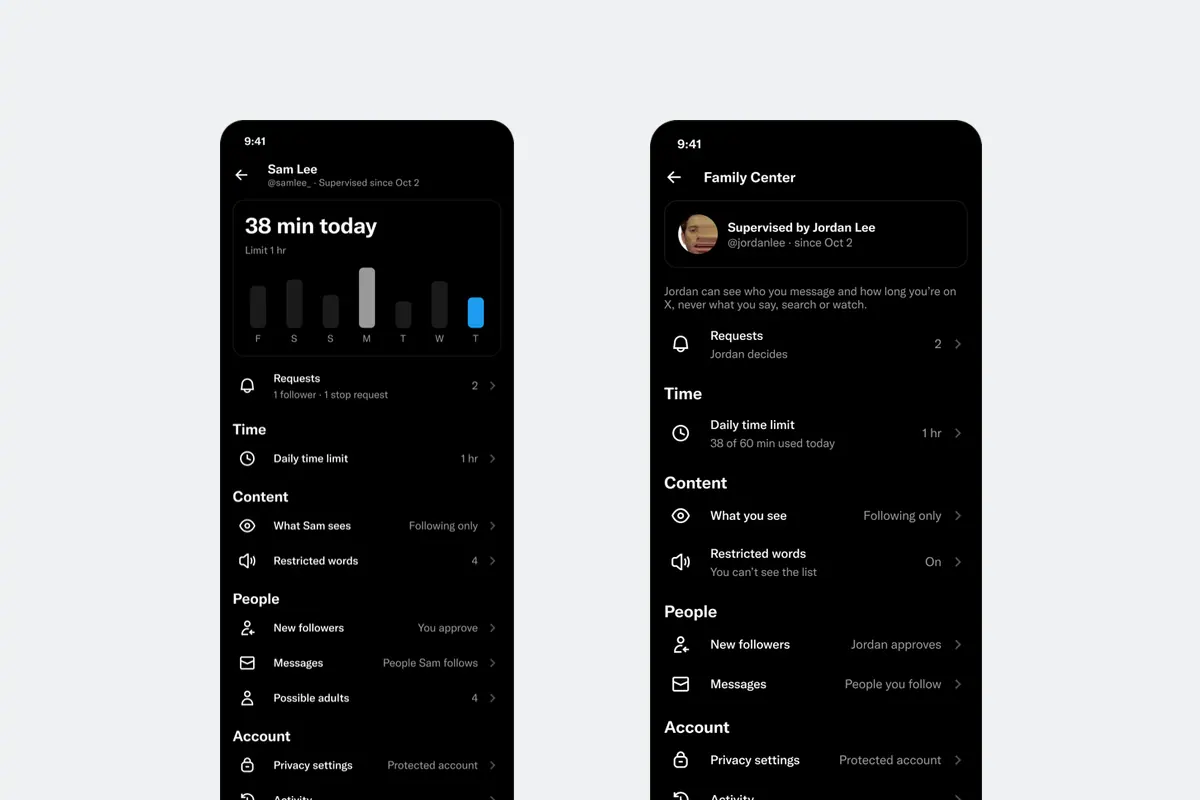
The official help page covers ages 13 to 17, requires an adult aged at least 18 and agreement from both users. One adult can supervise up to five teens.
This is not permission to use another person’s password. Supervision establishes a relationship between accounts rather than merging their identities. That distinction matters when reading a description such as “manage the experience”: managing certain options does not mean acting as the account holder.
Nor does it mean that every teenager has an active family link. Eligibility describes who can take part; linking describes a relationship that has been established. Confusing those situations would make a choice requiring participation look automatic.
What changes and what stays private
The table summarises permissions described in the help page, keeping their objects separate.
| Area | Described scope |
|---|---|
| Time | Set a daily limit |
| Followers | Approve new connections |
| One-to-one chats | See contacts, not messages |
| History | No access to searches or viewing |
Teens see changes; the adult decides on requests to end supervision.
These are small distinctions in wording but important ones in use. A contact list answers “who is in contact”, not “what was said”. A usage limit describes an access rule; it does not explain the purpose of a conversation or assess its quality.
In a fictional example, an adult sees an account name they do not recognise. That name alone does not establish a dangerous relationship, the other person’s real identity or the content of the messages. The tool supplies a starting point for a conversation rather than its conclusion.
Baseline protections are another layer
X’s page for parents and minors already describes protected accounts and messages limited to followed accounts for known minors. The platform also states restrictions on sensitive content. These are company policies, not results from our own assessment.
A baseline protection and a family decision are not interchangeable. The first concerns how a platform treats a category of users; the second adds a supervisory relationship. Reading both layers avoids attributing every existing measure to a new feature.
There is also a difference between a published rule and compliance in a particular case. This article does not include account creation, age verification or attempts to bypass restrictions. Documentation does not measure how many accounts have been classified correctly.
Reading the scope without promising safety
One way to organise the information is to ask who makes the decision, what object changes and what information becomes visible for each option. These are different questions. “Who decides?” concerns authority; “what changes?” concerns configuration; “what can be seen?” concerns access to data.
In a second fictional example, a time rule reduces the period of access without saying anything about the content encountered during that period. That does not make the rule useless. It shows that duration and content are different measures and should not be presented as the same thing.
The sources consulted do not establish a complete list of countries, app versions or accounts already covered. Nor do they demonstrate reduced harm, an absolute privacy guarantee or compliance with a particular law. The new development is the announced introduction of supervision and its described scope, with those limits visible.
Corrections
. Localized the image credit and rights information, preserving authorship, the source and the applicable restrictions.
Sources
Documents and reporting consulted for this story.
- ControlosX — Help Center. Primary source. accessed 26 November 2026
- Proteções de baseX — Help Center. Primary source. accessed 26 November 2026
- X is finally getting its first parental controlsThe Verge — Tom Warren, . accessed 26 November 2026
Topics

Written by
Wellinton OliveiraCEO of Lyntev
Technology with context, original analysis and sources you can consult.