New Balance Japan says attack on PLAID’s KARTE platform exposed 3.74 million customer records
The Japanese arm of the footwear brand is one of hundreds of companies hit by the 13 November attack on a single marketing software supplier. The case shows how one breach at a shared service reaches millions of people who never used it directly.
By Wellinton OliveiraCEO of Lyntev
Published
5 min read
Key points
- New Balance Japan said on 26 November that up to 3.74 million records from its online store were affected by the attack on KARTE, run by Japan’s PLAID.
- The data are customer number, gender, date of birth and the name of the last product bought; about 120,000 email addresses were stored as hashes.
- Names, phone numbers, card details and passwords are not included, according to the company, which will notify those affected by email.
- PLAID says linked data from 570 companies and credentials from 754 were exposed; the groups overlap and cannot be added up.
- KARTE has been offline since 13 November and is due to return in stages in mid-January 2027.
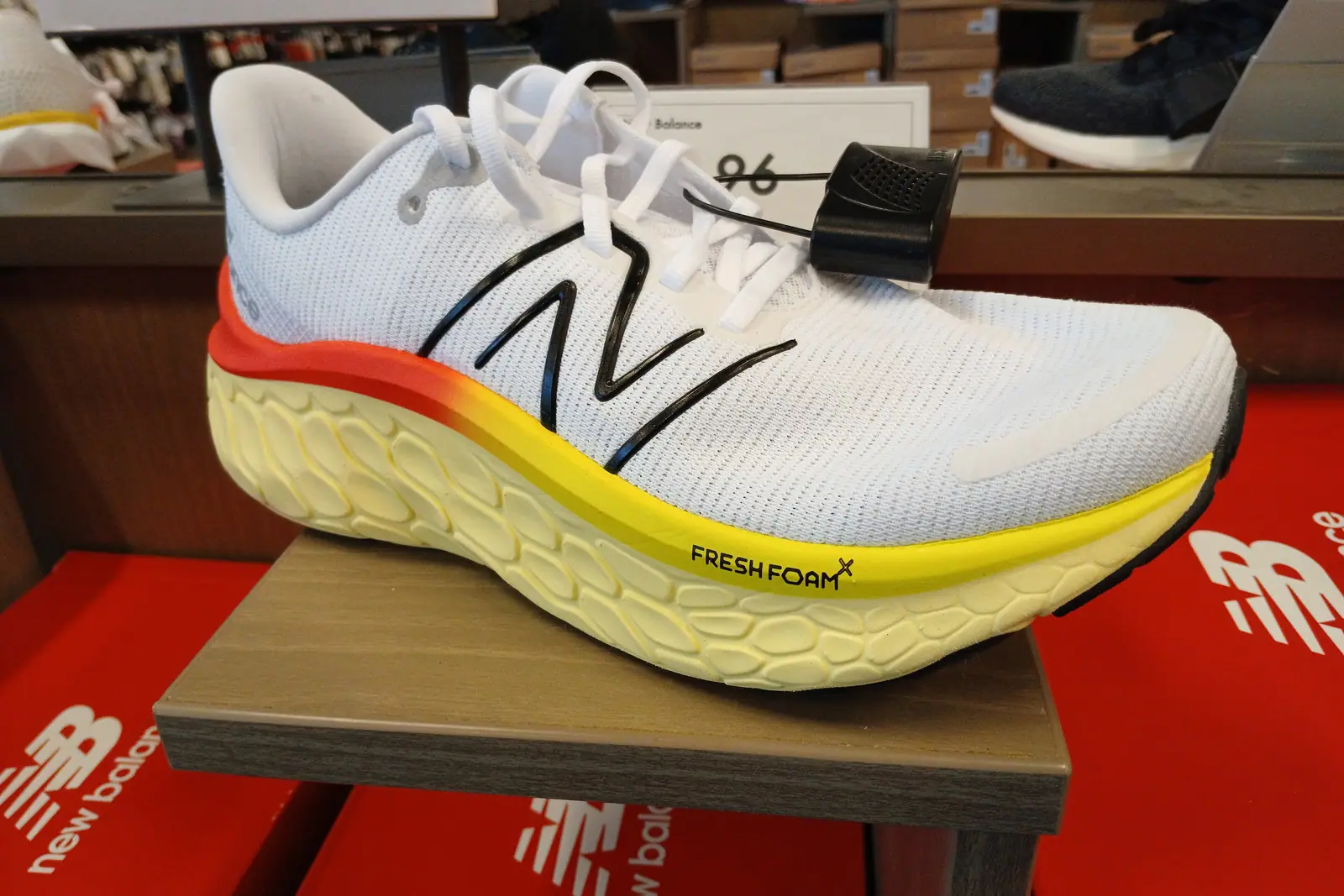
New Balance Japan, the Japanese subsidiary of the US sports footwear brand, said on 26 November that up to about 3.74 million member records from its official online store had been affected by unauthorised access. The breach did not happen in the brand’s own systems. It happened at KARTE, a customer analytics and marketing platform run by the Japanese company PLAID, which New Balance used to personalise its website.
According to the company’s notice, as described by Japan’s Cybersecurity.com, by Business+IT and by BleepingComputer, the exposed data do not include names, phone numbers, payment cards or passwords. New Balance Japan is just one of several hundred companies caught up in the same intrusion.
What New Balance Japan says was exposed
The notice, posted at 09:30 Tokyo time (00:30 in Lisbon) under a heading that apologises for a personal data leak caused by unauthorised access at an external service, lists four fields. They are customer number, gender, date of birth and the name of the last product bought, covering up to about 3.74 million records.
Separately, about 120,000 email addresses were also affected. They were stored as hashes, a mathematical transformation that replaces the address with a string of characters. The company says these values cannot be reversed, but it has not said which method it used, BleepingComputer notes. By our calculation, the email addresses amount to about 3.2% of all the records.
The brand says names, phone numbers, credit card details, the myNBID account identifier and login passwords were not included. Cybersecurity.com points out that the notice does not say when PLAID informed New Balance, nor when its internal investigation began or ended.
How one supplier’s breach reaches millions of customers
KARTE has existed since 2015. It records what each visitor does on a website or app and adapts what they are shown. PLAID compares it to a shop assistant who watches a customer and points them to the right product. To make that work, many companies uploaded part of their own customer files to the platform.
That model explains the scale of the case. A cloud software service (software as a service, or SaaS) concentrates data from hundreds of companies in a single place. Whoever gets in at that point reaches the customers of all of them, even people who have never heard of the supplier.
According to PLAID’s statement of 16 November, the attack began in the early hours of 13 November. A third party exploited a server vulnerability to steal the credentials used to connect to systems and databases, then read data out. With those credentials it took over PLAID accounts and got into the management console.
The company detected the attack at 08:59 Tokyo time, began shutting down servers at 14:27 and declared containment complete by about 15:23. It says it has seen no new access since. It reported the incident to the Personal Information Protection Commission, Japan’s privacy regulator, and is consulting the police.
How many companies the KARTE breach hit
The figure in circulation is 570 companies, cited by BleepingComputer. PLAID’s statement of 20 November shows that number refers to only one of four categories of affected data.
| Data category (PLAID, 20 November) | Companies affected | May contain personal data |
|---|---|---|
| Data that companies linked to KARTE | 570 | Yes, for some |
| Analytics data on visitor behaviour | 487 | Yes, for some |
| Temporary cache data | up to 409 | Possibly |
| Credentials for connecting to other services | 754 | No |
PLAID warns that the figures cannot be added together, because some companies fall into more than one category. One Japanese site went as far as reporting a total of about 2,200 companies, which matches the simple sum of the four categories. For the cache data, PLAID cannot tell what was read, so it treats everything stored there as potentially exposed.
The company also confirms the leak of 79,249 email addresses used for KARTE accounts and 45,816 of its own business contacts, with names and emails. The integration credentials are the keys that let KARTE talk to other services, such as newsletter platforms. PLAID asked companies to revoke them, because they could be used to write or extract data in those services.
The figures reported by individual companies show the reach, although they cannot be compared. According to BleepingComputer, ZOZO reported 15.18 million users of its ZOZOTOWN store. DHC reported 19.11 million records and Sumitomo Mitsui Banking Corporation 14 million. Impress Watch cites up to about 18.29 million accounts at the JINS eyewear chain. Netshop Impress warns that each company counts in its own way. Mediadogs adds that the same person may appear on the lists of several shops.
What New Balance customers in Japan should do
New Balance Japan will email members whose data may have leaked. According to mediadogs, questions go to the online store’s customer care, through a freephone number in Japan or an online form.
The main risk is fraud. Someone who knows a person’s date of birth and last purchase can write a more convincing fake message. The company says it never asks, by phone, email or text message, for bank details, card details, PIN codes, verification codes or passwords.
It also advises customers not to open links or attachments in suspicious messages sent in the brand’s name, and to report such cases to customer care. None of the sources consulted indicates that customers of New Balance stores outside Japan were affected.
Former clients’ data and the January 2027 restart
PLAID has admitted a second problem. It kept data belonging to companies that had already ended their contracts, which under the service’s own terms should have been deleted. It blames human and management failings. Impress Watch gives the example of Kaitech, which left KARTE in January 2025 and still had 27,530 email addresses leaked.
That data has not yet been deleted. PLAID says it must keep it as evidence for the checks that come before the service returns, and will erase it afterwards. KARTE has been offline since 13 November, and the aim is a phased return in mid-January 2027, after a redesign of the architecture and with verification by an outside body.
There is still no public answer on the hashing method New Balance used, the date it learned of the attack or who carried it out. PLAID is not charging companies for November or for the downtime, but has not yet set out the measures to stop it happening again.
Disclosure: Lyntev, which publishes this site, builds and maintains websites for businesses. About Lyntev.
From Lyntev, which publishes this site
Put it into practice
- Who can see and do what: team permissionsFree guide. Access matrix, isolation tests and what to do when someone joins or leaves.
- Organise customer data without losing its historyFree guide. Separate people, companies and requests, and handle duplicates with clear criteria.
Sources
Documents, reporting and references gathered for this story. Access limits are stated in the text or the reference itself.
A primary source is the origin of a document or statement; it may be the interested party itself. This label does not mean independent confirmation. The list also includes context and image references where relevant.
- 「KARTE」への不正アクセスに関する当社調査結果と、サービス再開の見通し等のお知らせPLAID, . Primary source. accessed 29 November 2026
- 不正アクセスによる個人情報を含む可能性のある情報等の漏えいに関するお詫びとお知らせPLAID, . Primary source. accessed 29 November 2026
- New Balance Japan suffers breach exposing 3.7 million customer recordsBleepingComputer, . accessed 29 November 2026
- ニューバランスジャパンがKARTE不正アクセスで最大約374万件の顧客情報漏えいを発表サイバーセキュリティ.com, . accessed 29 November 2026
- ワールド最大932万件、ニューバランス最大374万件 KARTE漏えい、企業で数字が膨らむBusiness+IT (Yahoo! News Japan), . accessed 29 November 2026
- ワールドのオンラインストア最大932万件、ニューバランス最大約374万件の会員情報が漏えいmediadogs, . accessed 29 November 2026
- 「KARTE」情報漏えい、JINS・三菱UFJなど多数の企業に影響Impress Watch, . accessed 29 November 2026
- DHC、しまむら、ワールド、JINS、RIZAPなどで顧客情報が漏えい。マーケプラットフォーム「KARTE」への不正アクセスの影響でNetshop Impress, . accessed 29 November 2026
Topics

Written by
Wellinton OliveiraCEO of Lyntev
Technology with context, original analysis and sources you can consult.