Portugal’s November 2026 is already among the four wettest since 2000, says IPMA
After the driest October in 40 years, two storms and an atmospheric river brought mainland Portugal almost twice the rain of a normal November by the 24th, with every district above average. IPMA’s assessment is preliminary. December is expected to begin drier.
By Wellinton OliveiraCEO of Lyntev
Published
4 min read
Key points
- By 24 November, average rainfall on mainland Portugal had passed 200 mm, about 180% of the 1991–2020 monthly normal, according to IPMA.
- On data to 24 November, the preliminary assessment puts November 2026 among the four wettest since 2000, alongside 2006, 2014 and 2025; every district is above normal.
- Storms Bruna and Charles (7 to 12 November) and an atmospheric river (20 to 22 November) account for the largest rainfall totals, according to IPMA.
- IPMA forecasts a drier first week of December and above-normal rain from the middle of the month; the final November bulletin is due in December.
November 2026 is already one of the four wettest Novembers since 2000 in mainland Portugal, according to the Portuguese Institute for Sea and Atmosphere (IPMA), the national weather service. By 24 November, average accumulated rainfall across the territory had passed 200 millimetres, about 180% of the normal total for the whole month.
The figures are preliminary and were published by IPMA on 27 November. The other three months in the group are the Novembers of 2006, 2014 and 2025. Every district on the mainland is above its monthly average, with Castelo Branco, in the interior Centre region, at between 250% and 300%.
How much rain fell in November 2026 after the driest October in 40 years
The contrast is stark. October brought only 12.3 millimetres of rain to the mainland, 11% of normal, making it the driest in 40 years, according to IPMA’s climate bulletin as reported by the Portuguese news agency Lusa. By the end of that month, 75% of the territory was in severe or extreme drought.
The “normal” used by IPMA is the 30-year average for 1991 to 2020. Saying November stands at 180% means that, in 24 days, almost twice as much rain has fallen as in a typical full November.
The previous hydrological year, which runs from October to September, was also erratic. IPMA classified 2025/2026 as the hottest since 1931 and the second wettest since 2000, with 1,097 millimetres. Rain was concentrated between November and February; a dry spring and summer then worsened the drought, above all in the south.
Storms Bruna and Charles: November rain and wind records
The first wave came with storms Bruna and Charles, two low-pressure systems that crossed the country between 7 and 12 November. IPMA’s assessment counted eight new records for a November: four for rain in a single day and four for wind gusts.
Within 12 days, several weather stations had already exceeded the average for the entire month. Mora reached 189%, Mértola 181% and Lisbon’s Tapada da Ajuda station 174%. The station at IPMA’s Lisbon headquarters measured 119.2 millimetres in 24 hours. At Fóia, in the Algarve, a gust reached 123.5 kilometres per hour.
On Madeira, storm Charles set a new all-time national record for daily rainfall. According to IPMA, the Chão do Areeiro station recorded 502.7 millimetres in 24 hours on 10 to 11 November. The previous national record, 497.5 millimetres, was measured at the same station on 6 June 2023.
Atmospheric river: the rain of 20 to 22 November
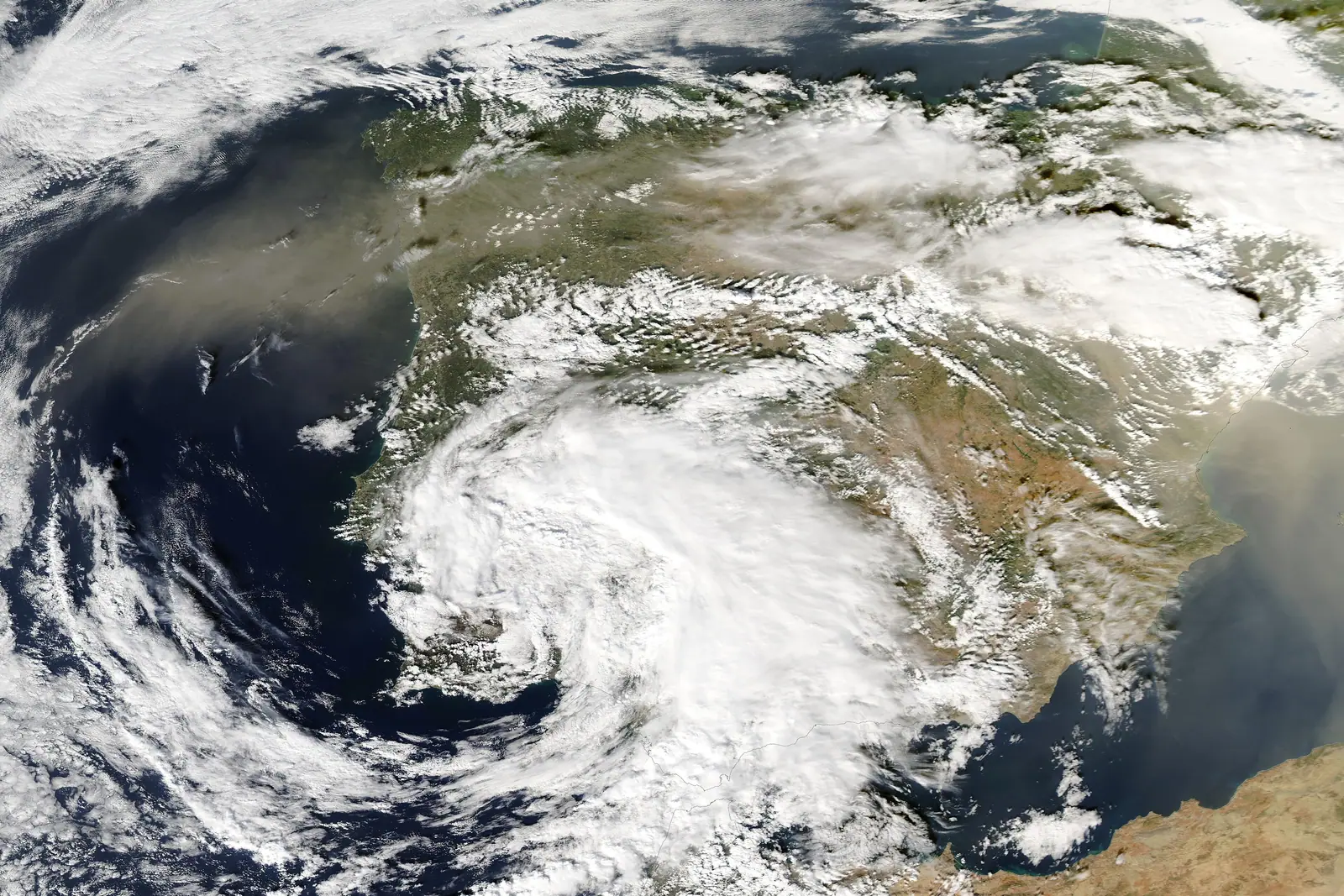
The second wave arrived between 20 and 22 November. IPMA describes a cold front linked to an extensive atmospheric river from the tropical Atlantic. An atmospheric river is a long, narrow band of very moist air that carries water vapour over thousands of kilometres.
The rain was widespread and at times intense and persistent. The heaviest totals fell in the north and centre, particularly in the Ribatejo, the western coast and the interior Centre. Tomar recorded 109.5 millimetres in 24 hours, 108.1 of them in just 12 hours. Rio Maior had 97.6 and Covilhã 92.6.
At five stations, six-hour totals exceeded 60 millimetres, the threshold for a red rainfall warning. Even so, no historical daily rainfall record was broken in this episode, IPMA notes.
Where November weighs most in the year’s total
After months of drought, November has delivered a large share of all the rain of 2026. At several stations, the first 22 days of the month account for more than a quarter of everything that has fallen since January. The table shows the cases highlighted by IPMA.
| Station | Share of 2026 rainfall that fell from 1 to 22 November |
|---|---|
| Alvega | 29.5% |
| Avis | 31.1% |
| Castelo Branco | 34.9% |
| Mora | 30.0% |
| Rio Maior | 29.6% |
Source: IPMA, preliminary analysis of 27 November 2026.
On the drought, IPMA’s drought index outlook expected relief, with a significant reduction in meteorological drought by the end of November. Meteorological drought measures a lack of rainfall; reservoirs and soils respond more slowly.
IPMA December forecast: a drier start, rain returning mid-month
The extended forecast published on 26 November points to a pause. In the week of 30 November to 6 December, rainfall is expected to be below normal across the country, especially in the north and centre, by between 10 and 30 millimetres.
The second week shows no clear signal. In the third and fourth weeks, up to 27 December, IPMA expects above-normal rain across the country, with 10 to 30 millimetres more than usual in the north and centre. Temperatures are forecast to be above normal in all four weeks.
The seasonal forecast of 20 November points the same way for the winter. It expects more rain than normal from December to February, by 5 to 25 millimetres a month in December and February and 5 to 15 in January, mainly north of the Montejunto and Estrela mountains. These forecasts show tendencies and do not predict the weather on a given day.
What about the reservoirs? What is still not known
The figure that matters most to farmers and local councils is still missing: how much water has reached the reservoirs. In May, after a wet winter, the head of the Portuguese Environment Agency (APA), José Pimenta Machado, said they were in their best condition ever, according to the business news site ECO.
The summer and early autumn since then have been dry. The weekly storage bulletin of the National Water Resources Information System could not be consulted for this article, and APA has not yet published a November assessment. IPMA’s final climate bulletin for the month, with the total and exact ranking, will only be released in December.
Sources
Documents, reporting and references gathered for this story. Access limits are stated in the text or the reference itself.
A primary source is the origin of a document or statement; it may be the interested party itself. This label does not mean independent confirmation. The list also includes context and image references where relevant.
- Precipitação de 20 a 22 de novembro de 2026Instituto Português do Mar e da Atmosfera (IPMA), . Primary source. accessed 29 November 2026
- Novos recordes de precipitação para novembroInstituto Português do Mar e da Atmosfera (IPMA), . Primary source. accessed 29 November 2026
- Novo recorde nacional de precipitaçãoInstituto Português do Mar e da Atmosfera (IPMA), . Primary source. accessed 29 November 2026
- Ano hidrológico 2025-2026Instituto Português do Mar e da Atmosfera (IPMA), . Primary source. accessed 29 November 2026
- Monitorização da seca, índice PDSI: antevisãoInstituto Português do Mar e da Atmosfera (IPMA). Primary source. accessed 29 November 2026
- Previsão para o período alargado, Continente, 30 de novembro a 27 de dezembro de 2026Instituto Português do Mar e da Atmosfera (IPMA), . Primary source. accessed 29 November 2026
- Previsão sazonal, dezembro de 2026 a fevereiro de 2027Instituto Português do Mar e da Atmosfera (IPMA), . Primary source. accessed 29 November 2026
- Portugal teve o outubro mais seco dos últimos 40 anosLusa / Notícias ao Minuto, . accessed 29 November 2026
- Albufeiras estão na melhor situação de sempre, diz presidente da APAECO, . accessed 29 November 2026
Topics

Written by
Wellinton OliveiraCEO of Lyntev
Technology with context, original analysis and sources you can consult.